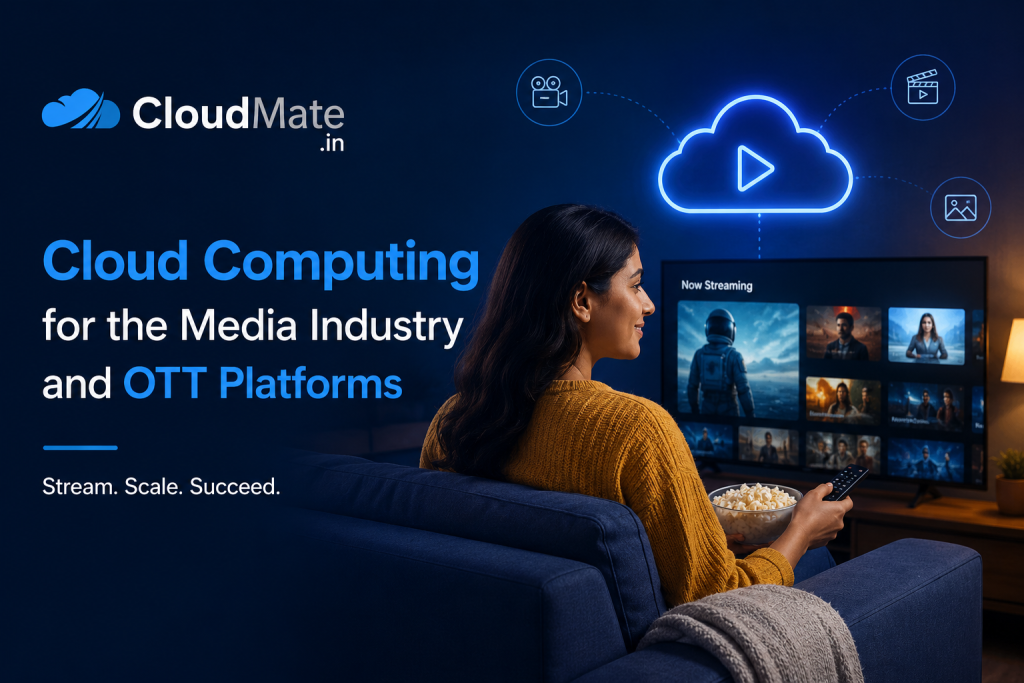
Cloud Computing for the Media Industry and OTT Platforms: Powering the Future of Digital Entertainment
The media and entertainment industry has undergone a massive transformation over the past decade. Traditional broadcasting and cable television are increasingly being replaced by digital streaming services, on-demand content, and interactive media experiences. The rapid rise of Over-the-Top (OTT) platforms has changed how audiences consume content, creating unprecedented demand for scalable, secure, and high-performance digital infrastructure.
Behind every successful OTT platform, streaming service, digital news portal, or media company lies a powerful technology backbone. Cloud computing has emerged as the driving force that enables media organizations to deliver seamless viewing experiences, manage massive content libraries, and scale operations efficiently.
In this article, we explore how cloud computing is revolutionizing the media industry, the benefits it offers OTT platforms, and why businesses are increasingly adopting cloud-based infrastructure to stay competitive in the digital era.
Understanding Cloud Computing in Media and Entertainment
Cloud computing refers to the delivery of computing services such as servers, storage, databases, networking, analytics, and software over the internet. Instead of investing heavily in physical infrastructure, media companies can access computing resources on demand and pay only for what they use.
For media organizations and OTT platforms, cloud computing provides the flexibility to store, process, distribute, and monetize content without the limitations of traditional data centers.
Whether it is a streaming platform serving millions of viewers, a production house managing terabytes of video footage, or a digital publisher delivering real-time news updates, cloud technology helps organizations operate efficiently and scale rapidly.
Why the Media Industry Needs Cloud Computing
Modern audiences expect instant access to high-quality content across multiple devices. They want uninterrupted streaming, fast-loading videos, personalized recommendations, and content availability anytime, anywhere.
Meeting these expectations requires significant computing power, storage capacity, and network performance. Traditional infrastructure often struggles to handle sudden traffic spikes, large media files, and global content distribution.
Cloud computing addresses these challenges by offering:
- Elastic scalability
- High-performance content delivery
- Cost-efficient infrastructure
- Advanced security controls
- Global accessibility
- Faster content production workflows
As media consumption continues to grow, cloud infrastructure has become a necessity rather than a luxury.
The Rise of OTT Platforms and Cloud Adoption
OTT platforms have fundamentally changed the entertainment landscape. Services that deliver movies, television shows, live sports, educational content, and music directly over the internet rely heavily on cloud technology.
Unlike traditional broadcasters, OTT platforms must support millions of simultaneous viewers, process vast content libraries, and provide personalized experiences based on user behavior.
Cloud computing enables OTT providers to:
- Stream content globally
- Scale instantly during peak traffic
- Manage extensive video libraries
- Deliver personalized recommendations
- Analyze viewer behavior in real time
- Ensure consistent platform performance
Without cloud infrastructure, managing such complex operations would be extremely challenging and expensive.
Scalable Infrastructure for Growing Audiences
One of the biggest advantages of cloud computing is scalability.
Audience demand can fluctuate dramatically for media businesses. A newly released movie, a major sporting event, or a viral news story can attract millions of viewers within minutes.
Traditional infrastructure requires organizations to purchase enough hardware to handle peak demand, even if those resources remain underutilized most of the time.
Cloud platforms solve this problem by allowing businesses to scale resources automatically based on traffic patterns.
Benefits include:
- No downtime during traffic surges
- Consistent streaming quality
- Reduced infrastructure costs
- Improved user experience
- Faster service deployment
This flexibility is particularly valuable for OTT platforms experiencing rapid growth.
Efficient Media Storage and Management
Media organizations generate enormous volumes of digital content every day.
High-definition videos, 4K content, audio files, graphics, animations, and production assets require substantial storage capacity.
Cloud storage provides:
- Virtually unlimited storage
- Automated backups
- Easy content retrieval
- Secure archiving
- Reduced hardware dependency
Content creators, editors, and production teams can access files from any location, enabling seamless collaboration across departments and geographic regions.
Cloud-based storage also ensures business continuity by protecting valuable assets from hardware failures and disasters.
Faster Video Processing and Transcoding
OTT platforms must deliver content across a wide range of devices and internet speeds.
A single video often needs to be converted into multiple formats and resolutions to support smartphones, tablets, smart TVs, laptops, and gaming consoles.
Cloud computing simplifies this process through powerful transcoding services.
Advantages include:
- Faster video conversion
- Automated workflow management
- Reduced processing time
- Support for multiple streaming formats
- Improved content delivery efficiency
Cloud-based transcoding ensures viewers receive the best possible quality regardless of device or network conditions.
Content Delivery at Global Scale
Viewers expect instant access to content no matter where they are located.
Cloud-powered Content Delivery Networks (CDNs) distribute media files across multiple servers worldwide, reducing latency and improving streaming performance.
Benefits of cloud-based content delivery include:
- Faster video loading times
- Reduced buffering
- Better streaming quality
- Global reach
- Enhanced viewer satisfaction
For OTT providers serving audiences across multiple regions, CDNs play a critical role in maintaining performance and reliability.
Real-Time Analytics and Audience Insights
Understanding audience behavior is essential for media businesses.
Cloud computing enables organizations to collect and analyze massive amounts of data in real time.
Media companies can track:
- Viewer engagement
- Watch time
- Popular content categories
- User preferences
- Subscription trends
- Geographic viewing patterns
These insights help organizations make informed decisions about content creation, marketing strategies, and platform improvements.
Data-driven decision-making has become a key competitive advantage in the digital entertainment industry.
Supporting Live Streaming Events
Live streaming has become one of the fastest-growing segments of digital media.
Sports events, concerts, conferences, webinars, gaming tournaments, and breaking news broadcasts attract large audiences that require stable and scalable infrastructure.
Cloud computing supports live streaming through:
- Auto-scaling resources
- Load balancing
- Real-time encoding
- Global content distribution
- High availability architecture
This ensures viewers enjoy uninterrupted streaming even during periods of extremely high demand.
Enhanced Security for Media Assets
Digital content is one of the most valuable assets for media organizations.
Unauthorized access, piracy, data breaches, and content theft can result in significant financial losses.
Cloud platforms offer advanced security features such as:
- Encryption at rest and in transit
- Multi-factor authentication
- Identity and access management
- DDoS protection
- Security monitoring
- Automated threat detection
These capabilities help media businesses protect intellectual property and maintain audience trust.
Remote Collaboration for Creative Teams
Modern media production often involves teams working from different cities and countries.
Cloud computing enables seamless collaboration among:
- Producers
- Editors
- Designers
- Writers
- Animators
- Marketing teams
Team members can access files, edit content, review projects, and communicate in real time from virtually any location.
This flexibility accelerates production workflows and supports hybrid and remote work environments.
Cost Optimization for Media Businesses
Building and maintaining traditional data centers requires significant capital investment.
Organizations must purchase servers, storage devices, networking equipment, and backup systems while also managing maintenance and upgrades.
Cloud computing reduces these expenses through a pay-as-you-use model.
Benefits include:
- Lower upfront costs
- Reduced hardware investment
- Predictable operating expenses
- Improved resource utilization
- Faster return on investment
Media companies can focus more on creating exceptional content and less on managing infrastructure.
The Role of Cloud Computing in AI-Powered Content Personalization
Personalization has become a major differentiator for OTT platforms.
Cloud-based artificial intelligence and machine learning services enable platforms to analyze user behavior and recommend relevant content.
Examples include:
- Personalized movie recommendations
- Dynamic content suggestions
- Viewer retention analysis
- Targeted advertising
- Predictive audience engagement
These capabilities improve user satisfaction and increase subscriber retention rates.
Why Indian OTT Platforms Should Consider Local Cloud Hosting
As India’s digital economy grows, data sovereignty and regulatory compliance are becoming increasingly important.
Hosting media applications and OTT platforms on Indian cloud infrastructure offers several advantages:
- Lower latency for Indian audiences
- Faster content delivery
- Compliance with emerging data regulations
- Improved performance
- Better customer experience
- Local technical support
For businesses targeting Indian viewers, local cloud hosting can significantly enhance platform performance and reliability.
How CloudMate Supports Media and OTT Businesses
CloudMate provides reliable cloud infrastructure solutions designed to meet the evolving needs of digital businesses.
With high-performance cloud servers, scalable hosting environments, NVMe-powered storage, advanced security features, and Indian data center options, CloudMate helps media companies and OTT platforms deliver exceptional digital experiences.
Whether you are launching a new streaming service, managing a growing content platform, or modernizing your media infrastructure, CloudMate offers the performance, scalability, and reliability needed for long-term success.
Conclusion
Cloud computing has become the foundation of modern media and OTT operations. From content creation and storage to streaming, analytics, personalization, and security, cloud technology enables organizations to deliver engaging digital experiences at scale.
As audience expectations continue to evolve and content consumption grows, cloud infrastructure will play an even greater role in shaping the future of entertainment and digital media.
For media companies, broadcasters, content creators, and OTT platforms, investing in cloud computing is no longer just a technological upgradeit is a strategic necessity for growth, innovation, and long-term competitiveness in the digital age.